
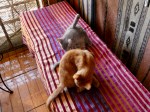
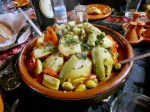
The six week adventure began with travelling with Intrepid Travel group for 15 days around Morocco on their Best of Morocco tour, in a group of 16 people of mixed nationalities. Overall impressions of Morocco – a great sense of hospitality and community; tasty tagines, tagines and more tagines; thousands of roaming cats and good shopping with well practised bargaining as the trip progressed.
Thanks to Google for the various information notes.

We commenced our tour at Casablanca and then travelled east through coastal Rabat and Meknes. Rabat, Morocco’s political and administrative capital, may be short on top-drawer tourist attractions but it compensated with plenty of charm. The ville nouvelle’s palm-lined boulevards were clean, well kept and relatively free of traffic – a blessed relief for those who have spent time in Casablanca. There’s a clean central beach, an intact and evocative kasbah, and an attractive walled medina that was far less touristy than those in other large cities. All in all, the city was a good choice for a short sojourn.
Rabat’s history is long and colourful, having been host to Roman settlements, pirates and more recently the Moroccan parliament. It contains numerous fine Arab monuments, some dating from the 10th to 15th century Almohad and Merenid dynasties, and others that are far older. We stored our luggage and spent a few hours strolling through the city’s old quarter, then walked up to Kasbah des Oudaias and enjoyed views over the Atlantic Ocean.
Afterwards, we continued to Meknes on a three-hour train. The imperial city of Meknes was built when Sultan Moulay Ismail (a contemporary of Louis XIV) set out to create his own version of Versailles, using over 25,000 slaves to construct walls, gates and over 50 palaces.
Quieter and smaller than its grand neighbour Fes, Meknes feels rather overshadowed and receives fewer visitors than it should. It’s more laid-back with less hassle, yet still has all the winding narrow medina streets and grand buildings that it warrants as an imperial city and one-time home of the Moroccan sultanate. We tried a camel burger for lunch at a friendly local restaurant in the medina and it was very tasty.


Later we boarded our minibus and travelled for one hour through rolling hills and olive groves to the archaeological site of Volubilis. World Heritage-listed Volubilis was once a provincial Roman capital, a distant outpost of the empire, and the remains make an undeniably impressive sight. Sitting in the middle of a fertile plain, the ruined Roman city of Volubilis is the best-preserved archaeological site in Morocco. Its most amazing features are the many beautiful mosaics preserved in situ, and it was declared a UNESCO World Heritage site in 1997.


Onwards, we made the two-hour drive to Fes, where we spent the next two nights. Fes is the spiritual and cultural heart of Morocco; vibrant, noisy, fascinating and overwhelming – a visual and pungent feast for the senses – with a huge, well-preserved medieval old city that’s the mother of all medinas. In its heyday, Fes attracted scholars and philosophers, mathematicians and lawyers, astronomers and theologians. Craftsmen built them houses and palaces, kings endowed mosques and medersas (religious schools), and merchants offered exotic wares from the silk roads and sub-Saharan trade routes.
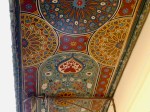
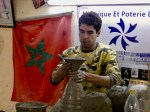
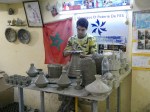
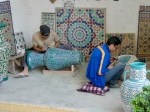
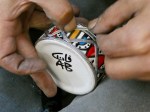
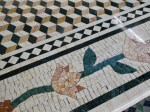
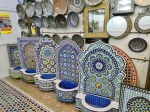
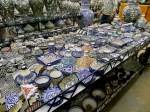
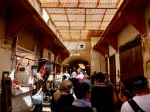
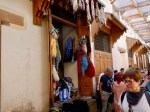
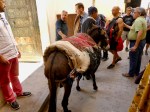
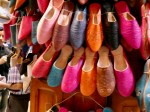
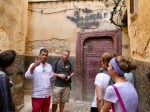
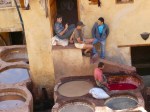
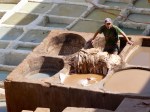
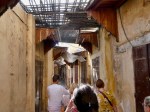
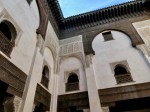
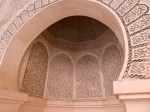
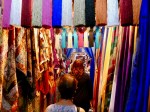
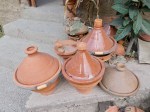
Although Fes lost its influence at the beginning of the 19th century, it remains a supremely self-confident city whose cultural and spiritual lineage beguiles visitors. Something of the medieval remains in the world’s largest car-free urban area: donkeys cart goods down the warren of alleyways, and while there are still ruinous pockets, government efforts to restore the city are showing results. We embarked on a full-day tour around the Medina of Fes. While we were on our feet for at least five to six hours, we enjoyed exploring the souks with a local guide and spent time learning about the creation of local decorated pottery and beautiful soft leather goods at the rather malodorous tannery.


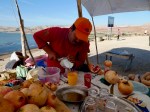

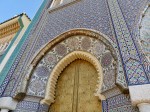
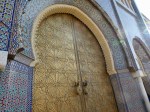






























We boarded our minibus and left the intensity of the city behind for the simplicity of the scenic Middle Atlas Mountains (approximately 4 hours). Drove south, inland through a variety of spectacular scenery – fertile valleys, cedar and pine forests and barren, rocky landscapes. The area was populated with wandering nomadic shepherds attending to their flocks. We decided to take our picnic lunch inside a shepherd’s tent with a nomadic family. They were very hospitable and served us mint tea – without sugar!!!


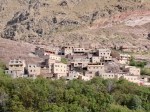
Driving on we headed towards Midelt. Nestled in a valley, Midelt is a market town, originally built as a base for mining in the area, and surrounded by farmland and orchards. We stretched our legs as we explored the nearby Berber village of Berrem and took a closer look at local farming life. The village houses were made of mud brick and were very simple in design. Amazingly the villagers did have electricity which made their life a little easier. Once again mint tea and local food hospitality was offered.


Midelt sits in apple country between the Middle and the High Atlas and makes a handy break between Fes and the desert. Coming from the north, in particular, the landscape offers some breathtaking views, especially of the eastern High Atlas, which seem to rise out of nowhere. With around 45,000 inhabitants, this city is one of the highest elevated towns in Morocco, sitting at over 1,493 metres.
Midelt serves as the market for an agricultural area for its surrounding regions. It is a region known for apples, walnuts, plums, apricots, pomegranantes, wheat, corn, and various garden vegetables. Nomads and farmers from the local area also raise sheep and goats for their wool.
Mines near Midelt are harvested for their lead, gypsum, and several other minerals. The area between Fez and Erfoud is the primary mining area of Morocco. This is where the finest mineral specimens of this country originate. These minerals include meteorites, vanadinite, azurite, malachite, wulfenite, fluorite, titanite, epidote, cobalt calcite, selenite, erythrite and many other rare minerals. The town of Midelt is a good place to look for minerals and fossils. Local handcrafts including Nomadic style carpets and blankets are also desirable from this area.


Southwards to the Erg Chebbi dunes. It was a five-hour drive towards the mighty Sahara Desert. Since we had the convenience of our own minivan, there were many opportunities to stop and admire views of kasbahs (walled cities, fortresses) and palmeries (valleys lush with date palms, fields and orchards) along the way. We drove through changing scenery, from barren mountainsides to fertile valleys, pausing in frontier towns like Erfoud and Rissani, before reaching the end of the road at the small Saharan settlement of Merzouga. With a backdrop of the orange-coloured Erg Chebbi sand dunes, the charming Saharan village of Merzouga felt wonderfully isolated, like the modern world had left it behind.
We stored our main baggage, saddled up our daypack and mounted a camel for a one-hour sunset ride into the desert. The Erg Chebbi dunes are the most stunning in the country and an essential part of any visit to Morocco. An erg is a vast sea of shifting wind-swept sand that’s formed into picturesque, undulating crests and valleys. Located at the end of a sealed road and just 20 kilometres from the Algerian border, this really felt like frontier country. We spent the night in a desert camp under the stars. Our local friends prepared a hearty feast, so all we needed to do was sit back and relax.


We returned from our desert stay and began the drive to Todra Gorge, including the beautiful Todra Valley which followed the foothills of the Atlas Mountains and was dotted with mud-brick villages perched on hillsides. The remarkable scenery – sprawling green valleys and rocks sculpted into stunning formations by the wind – was our home for the next two nights.


Our next stop, Ait Benhaddou, was my favourite Moroccan destination. Centuries ago, this was an important stop for caravans carrying salt across the Sahara. Today its grand kasbah, a fine example of clay architecture, has been listed as a World Heritage site. Located in the foothills on the southern slopes of the High Atlas in the Province of Ouarzazate, the site of Ait-Ben-Haddou is the most famous ksar in the Ounila Valley.
The Ksar of Aït-Ben-Haddou is a striking example of southern Moroccan architecture. The ksar is a mainly collective grouping of dwellings. Inside the defensive walls which are reinforced by angle towers and pierced with a baffle gate, houses crowd together – some modest, others resembling small urban castles with their high angle towers and upper sections decorated with motifs in clay brick – but there are also buildings and community areas. It is an extraordinary ensemble of buildings offering a complete panorama of pre-Saharan earthen construction techniques.
The oldest constructions do not appear to be earlier than the 17th century, although their structure and technique were propagated from a very early period in the valleys of southern Morocco. The site was also one of the many trading posts on the commercial route linking ancient Sudan to Marrakesh by the Dra Valley and the Tizi-n’Telouet Pass. Architecturally, the living quarters form a compact grouping, closed and suspended. The community areas of the ksar include a mosque, a public square, grain threshing areas outside the ramparts, a fortification and a loft at the top of the village, a caravanserai, two cemeteries (Muslim and Jewish) and the Sanctuary of the Saint Sidi Ali or Amer. The Ksar of Ait- Ben-Haddou is a perfect synthesis of earthen architecture of the pre-Saharan regions of Morocco.


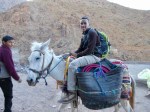
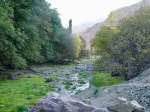
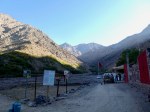
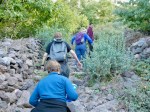
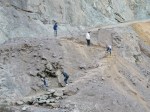
We bade farewell to the Sahara and journeyed over the spectacular Tizi n’Tichka Pass (2,260 m above sea level) to Toubkal National Park (approximately 5 hours), photographing snow-dappled mountains and valleys in full flower along the way. At the end of the road in Imlil, we stored our main luggage and loaded a daypack onto a pack mule. We walked into traditional mountain village life with a one-hour steep, rocky trek up to the peaceful village of Aroumd, far from the reach of the modern world.


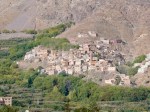
Perched on a rocky outcrop, the remote village of Aroumd offered stunning views across the High Atlas Mountains and a unique opportunity to experience traditional Berber culture. We spent the night in a family-run mountain home (gite) in Aroumd. We met the host family and enjoyed Berber hospitality and food.


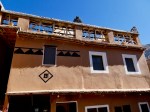
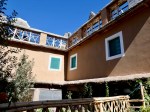
























Heading west to the coast and the old fishing town of Essaouira, we looked forward to a change from tagines!!! Essaouira, a city where the medina brushes up against the Atlantic Ocean. Sandstone walkways contrasted with whitewashed houses, bright blue sky and the sand of the surrounding beaches and dunes. This artists’ town was once home to sizeable British and Jewish populations, and its charm has seduced people like Orson Welles and Jimi Hendrix, who (according to local legend) spent much of his time here in the 1960s.
The narrow streets of Essaouira were ideal for casual exploration. Their size discouraged cars, and on a walk through the town it felt as though little had changed since the days of sea pirates. The fishing port is a serious commercial operation and our guide Mohammed purchased an excellent range of seafood for us to enjoy at lunch. A freshly-cooked plate of the day’s catch is highly recommended.
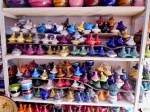
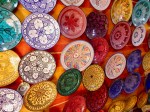
We browsed the plentiful shops and intriguing art galleries that made this little town a particularly pleasant place to unwind. It has a growing reputation for its unique art and is becoming even more famous for its burled Thuya wood, delicately formed and inlaid in tiny shops that are built into the thick walls of the Portuguese ramparts. The scent from the oils used to polish the richly coloured wood permeated the air and made walking down the streets incredibly pleasant. We took the opportunity to indulge in a hammam or local-style bath with steam bath, exfoliations scrub and relaxing massage. It was excellent!!


And finally, to Marrakech which is also known as the «pearl of the south» or the «red city», due to the prevalence of this colour among its houses. Without a doubt, Marrakech is Morocco’s most exciting and probably most beautiful city. In 1985, the medina, the old town – with its famous Djemaa el Fna square – and the Agdal and Menara Gardens were added to the UNESCO list of World Heritage sites.
Marrakech is a city of tremendous contrasts. It is loud and noisy in the medina between all the souks, idyllically tranquil in the Jardin Majorelle and the view from the top of the Atlas mountains is simply majestic. The city is around 50 kilometres away from the mountains, and a good 150 kilometres from the Atlantic.
Although Marrakech is lively, it can also be romantic. The city is oriental and packed with history, yet also flaunts its modern side. The tales of Arabian Nights come to life in every corner of the city. And in the evening, there is no better place to enjoy the unique atmosphere than on the Djemaa el Fna square. Jugglers and acrobats put on their artistic shows, snake charmers flaunt their skills among all the noise, while all around, the air is filled with the delicious aroma of meat, fish, couscous and all sorts of different spices.
We arrived in Djemaa el Fna square on a Sunday evening and it was VERY busy. Manic in fact!!!! Everybody was there and the square was packed. A bit overwhelming!!!


Following the completion of the Intrepid Best of Morocco tour, I stayed in Marrakech for an additional five days, using an AirBnb as my base. I visited the Photography Museum, Jewish Cemetery, navigated successfully through the labyrinthine souks using Google Maps, Bahia Palace, Jardin Majorelle and even completed a tagine cooking session.


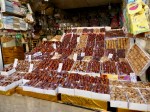
So ended my amazing three weeks in Morocco with some incredible sights, sounds and flavours. We had a terrific tour guide in Mohammed; our group was friendly, caring and sharing; weather was fabulous; the pomegranates were huge and cheap by Aussie standards; the range of edible dates was stunning; Moroccan attitude towards women was more progressive than other nearby Arab countries; salesmen were prepared to bargain hard; strong sense of local community and family; fresh sardines are really sweet and the local people are very resilient living in dry and demanding conditions. It was on to the next stage of my six week adventure, Egypt, for an eight day Intrepid Tour.
 Travel Adventures